
PhD Position in Microbial Dormancy in Glacial Forefields
Institute of Soil Biology and Biogeochemistry
Microbial processes Section
Anaerobic and molecular microbiology
Employment contract
Researcher
Fixed-term
Part-time
1. 2. 2026
10. 1. 2026
Master Degree or equivalent
Job description:
The Biology Centre and Institute of Botany of the Czech Academy of Sciences is seeking a student to work on microbial dormancy and growth in Alpine glacial forefields using stable isotopes and 'omics methods.
Soils are full of microbes, but how many of them are active and how many are dormant?
Many have tried to answer this question, but we still lack reliable, high-throughput methods to do so.
The Project "is QoMA" aims to quantify microbial dormancy and growth in glacial forefield soils, focusing on the hypothesis that, while microbes are widely dispersed, many remain dormant until favourable conditions arise. Previous studies have primarily focused on cataloguing the microbes present in the soil, but this project will investigate and quantify the proportions of dormant versus active microorganisms in newly deglaciated environments compared with developed alpine meadows.
We plan to combine state-of-the-art methods, including quantitative Stable Isotope Probing (qSIP) and NanoSIMS visualisation, to assess microbial growth and active biomass. In addition, a significant part of the project will be dedicated to developing novel, high-throughput methods for assessing microbial dormancy in soils.
Work will be carried out at the Biology Centre CAS in České Budějovice, Czechia. Our field site is in the Pitztal Valley in the Austrian Alps, with sampling conducted during two seasons to capture variations in microbial activity. The team, composed of experts from the Institute of Soil Biology and Biogeochemistry and the Institute of Botany, has extensive experience in glacial ecosystems and aims to produce high-impact publications while ensuring data transparency and public engagement.
This project builds on our previous work on this and other similar sites around the world.
Requirements:
- A master's degree in microbiology or a related field
- Basic training in microbiology (preferably environmental microbiology), statistical analysis and bioinformatics
- Ability to work on a multidisciplinary project involving fieldwork, lab work and computational analysis
Benefits:
- 5 weeks of paid holiday yearly, subsidized lunches in our own canteen
- Pension insurance contribution, support of leisure sport & cultural activities
- Full health insurance and social security, student benefits for PhD students
- Free Czech language classes, professional trainings and mentoring programme
- Concessionary services at the contractual operator and bank
- Campus-based daycare for employees' children from the age of 1 year
- Welcome service and further support for foreigners (HR Award)
- English speaking, friendly & stimulating international working environment
- Work-life balance in a middle-sized university city offering options for various activities
- Working in a stable, prestigious research institution of international importance
Additional information:
Training and employment conditions:
Possible starting dates: February – June 2026.
The student will be employed part-time by the Biology Centre CAS and will receive all social and medical benefits. Salary will be supplemented by a governmental stipend for enrolling on doctoral studies in Ecosystem Biology and Ecology at the University of South Bohemia. In addition to academic courses, the project offers training in the following fields:
- Field work and measurements using data loggers
- Experimental design, lab incubations with stable isotopes
- Cell extraction and molecular work
- Advanced microscopy
- Bioinformatics and statistical analysis
Research infrastructure and study programme:
Work will be conducted at the Institute of Soil Biology and Biogeochemistry (ISBB), Biology Centre of the Czech Academy of Sciences (BC CAS), in České Budějovice, within the graduate study programme of the University of South Bohemia. ISBB focuses on soil regeneration and maintenance of soil fertility in both natural and human-affected ecosystems. The main research lines include the structure and dynamics of soil communities, interactions among soil animals, microorganisms, and the abiotic components of soil, soil microstructures, nutrient cycling and soil transformation. We use diverse methodological approaches (molecular biology, stable isotopes, field ecology, mathematical modelling, etc.) and a combination of analytical and holistic approaches to problem-solving. Core facilities with shared equipment support all research groups.
About the workplace and location:
České Budějovice is a medium-sized town, about 150 km south of Prague, with a population of 100,000. It offers a relaxed atmosphere and a growing community of foreign scientists at the University and the Biology Centre. Three faculties and five research institutes focused on aquatic and terrestrial biota are located on the same campus, facilitating easy access for other researchers and resources. The town and the surrounding countryside provide numerous opportunities for research and leisure activities. Living costs are low by international standards. Czech language courses are offered to international staff to help them reach a basic level of proficiency in everyday situations.
BC CAS is a recipient of an HR award and is experienced in accommodating ex-pats. We promote diversity and welcome your application regardless of age, gender, cultural and social background, religion, disability or sexual identity.
Useful links:
About the research group:
- https://www.upb.cas.cz/en/structure/microbial-processes/anaerobic-and-molecular-microbiology/
- https://www.bc.cas.cz/en/contacts/employee-list/contact/20948/
- https://www.researchgate.net/profile/Roey_Angel
Support for ex-pats at the Biology Centre:
About the doctoral programme:
Studying in Czechia and living costs:
- https://www.studyin.cz/live-work/living-costs/
- https://www.numbeo.com/cost-of-living/in/Ceske-Budejovice
BC CAS researchers recruitment policy:
How to apply:
Please submit a professional CV (2 pg. max), a motivation letter (max. 1 page), publications (if any), and contact information for two professional references via the REPLY button below.
Preference will be given to applications received by January 10th 2026.
Only suitable applicants who match the abovementioned criteria and adhere to the application procedure will be answered.
For further information contact Dr Roey Angel at roey.angel@bc.cas.cz
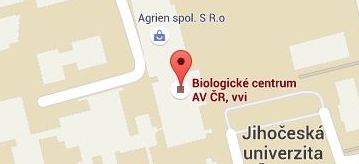
Biologické centrum AV ČR, v.v.i.
Branišovská 1160/31
370 05 České Budějovice
hr@bc.cas.cz